
Welcome to Svalbard: An Unforgettable Arctic Adventure
I recently travelled with one of our schools on a Svalbard school trip, we were lucky enough to experience a variety of different activities across the archipelago including wildlife spotting, learning about the history of the island and the importance of the mining infrastructure here along with hiking up a glacier and learning about the polar bear!
Settling into Arctic Life
After travelling to the island, we settled into our accommodation at Mary Ann’s Polarigg, which was cosy and welcoming. The common area has a homey vibe and was perfect for relaxing in the evenings and in free time, whilst being close enough to the town for venturing to the local supermarket (singular) for souvenirs. We had local Svalbardian cuisine on the nights here which included the most popular food on the island – Reindeer!
Climate Change in the Arctic
After learning that Svalbard actually has one of the largest carbon footprints per capita with approximately 60 – 64 tons of CO2 per person annually – compared to mainland Norway with approximately 8 – 9 tons per person annually, we were intrigued to learn about the different approaches of life to counteract this impact on our planet. Svalbard, and the Arctic, is experiencing global climate change quicker than anywhere else on the world, and Svalbard, in particular is warming 3 times quicker than the mainland. Being able to see this in action was a particularly special learning opportunity and to be able to discuss with locals the different renewable energy sources, and the reasons they are not able to be implicated within the island also helps to spark imagination within the students which is particularly important for the future generations. For example, the frozen sea in the winter preventing hydropower, the excessive wind removing the possibility of wind power (especially when pack ice is present in the winter months and winds are stronger) and low UV and minimal sunlight preventing solar.
Wildlife Spotting and Glaciers
Our first day involved a hybrid electric catamaran cruise into the varying landscapes of the island, travelling into the Billefjorden fjord and visiting the Nordenskiöldbreen glacier – along our journey we saw a variety of different sea birds and land mammals, along with white-beaked dolphins and minke whales! We did keep our eyes out for the infamous polar bear, to no avail. Our knowledgeable guides were able to tell us about the adaptations taking place in this microclimate, including the minke whales being one of the only hunted animals and their learned behaviour to deep dive as boats approach – making our sightings even more special! Lunch was provided on board; binoculars were available to rent and hot drinks were purchasable and very much needed in the -10° temperatures!
Discovering the Polar Bear
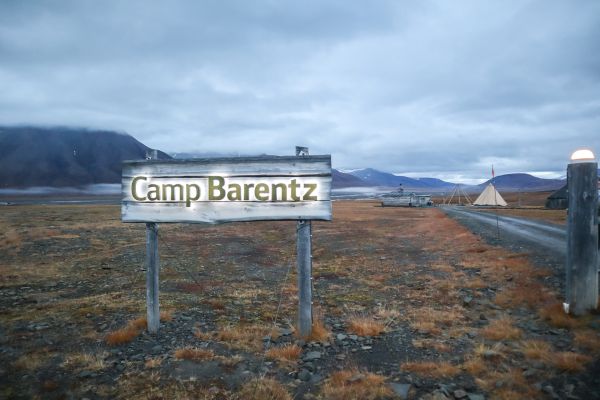
Later this evening, we travelled to Camp Barentz in search of the Northern Lights and for some insight into the history of Svalbard. This camp is named after the Dutch cartographer and navigator who discovered the island in search for the Northeast passage. We also enjoyed a nice warm meal while we learned about the venerated polar bear – the mighty beasts on the island. With around 300 resident bears, the loss of sea ice has been detrimental to their survival which has led to another interesting adaptation on the archipelago – notoriously, the bears hunted seals, though it has recently been observed of the bears hunting the Svalbard reindeer and even developing their climbing skills to raid sea birds’ nests. Showing yet again, the affects climate change is having in the Arctic, and delivers the powerful message with students seeing and hearing about these impacts first-hand.
Glacier Exploration
We awoke a little later the next day, with a busy day planned. We met with our expert guides at the hotel, who briefed us on the plans of the day and the safety procedures. As we travelled outside of the town, we were required to have armed guards in case we encountered the mighty bears – which is a must here! After gearing up with hiking poles and crampons, and collecting our dry tech food, we journeyed up into the mountains surrounding the valley. After some time, we enjoyed our warm lunch surrounded by majestic glacial formations – a once-in-a-lifetime opportunity. Continuing up the glacier, we were able to view the different formations and moulins. We investigated how glacial movements are measured and how global warming is affecting both the size and continuation of the glacial formation. This specific tour could be challenging for some on the actual hike but extremely rewarding and enjoyed thoroughly by every student. This was also my personal favourite excursion!
Beneath the Surface
Our coal mine tour the following day was insightful into the importance of coal in Svalbard’s history and how this coal is now being used across the world. The students explored the mine and even tried crawling in one of the smallest mines – only 60cm high! After taking some coal as a souvenir, we learned about the daily life of a miner and how ultimately coal mining was only profitable for 2 years in Svalbard but continued for over 100 years with its strategic geopolitical location. A fascinating insight into the importance of Arctic security and the geological formation of Svalbard.
Inside the World’s Seed Safeguard
When stopping at the Svalbard Seed Vault on our return to the town, we were incredibly lucky to witness the rare event of the Seed Vault receiving a global shipment of new seeds – which happens only three times a year!
Exploring Longyearbyen
Our final activity was a walking tour of the city and a stop at the Svalbard Museum. This was a fantastic learning opportunity for STEM, Geography and History students alike. Learning about how different countries around the globe (including the UK) have shaped Longyearbyen and how the town has continued to thrive since its establishment, despite its challenges and the impossibility of living here! Described by locals as Terra Nullius (no man’s land) as the climate and countless other daily struggles make this place futile to sustain mankind. From seeing bullet holes in the buildings from back in World War II, to how the country has adapted with its infrastructure to combat the permafrost and constant danger of landslides with the warming of the planet.
Why Svalbard?
Svalbard is assuredly not your average school trip – but it absolutely should be. The endless learning opportunities and captivating landscapes make for a trip which will stay with students for a lifetime. Get in touch to discuss your trip today!